AI Summary
- Cataract lens choice affects your vision quality after surgery.
- Different lenses are designed for different vision needs and lifestyles.
- Monofocal, multifocal, and toric lenses have different benefits.
- Your daily activities, eye health, and vision goals help determine the right choice.
- Discuss all cataract surgery options with your eye specialist before deciding.
Introduction
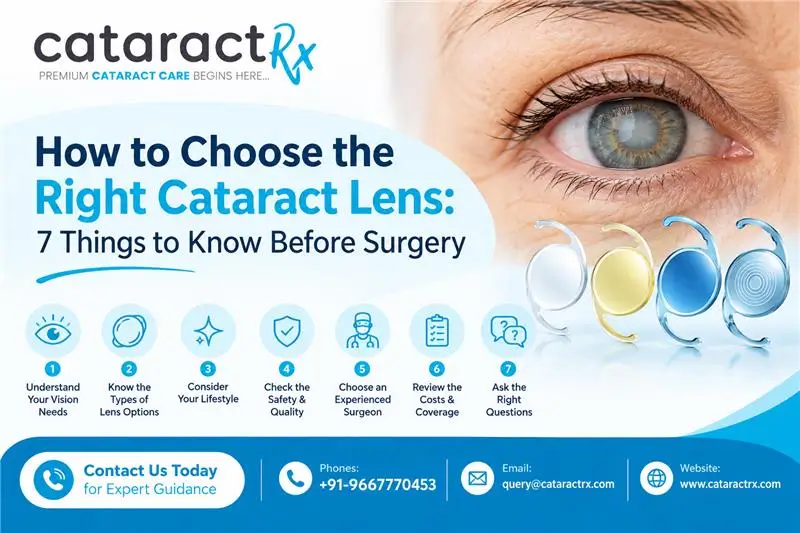
Cataract surgery can help restore clear vision by replacing the cloudy natural lens of the eye with an artificial lens called an intraocular lens (IOL). However, choosing the right lens is an important decision. The best lens depends on your lifestyle, eye condition, and how you want to see after surgery. Understanding your options before the procedure can help you make a more informed choice with your doctor.
What Should You Know Before Choosing a Cataract Lens?
Choosing a cataract lens is not only about getting clear vision. It is also about matching the lens with your daily needs. Some people want freedom from glasses, while others prefer a simple solution for distance vision.
The right choice depends on factors such as:
- Your reading and computer habits
- Whether you drive at night
- Your need for near, intermediate, or distance vision
- Existing eye conditions
- Your comfort with wearing glasses after surgery
Understanding these factors can make the decision easier.
What Are the Different Types of Cataract Lenses Available?
There are several cataract lens options available today. Each type works differently and is designed for specific vision requirements.
1. What Is a Monofocal Cataract Lens?
A monofocal lens provides clear vision at one distance, usually far vision. Many patients choose this option because it offers reliable results and a simple approach.
However, people with monofocal lenses may still need glasses for reading, using a smartphone, or doing close-up work.
This option may suit people who:
- Prefer clear distance vision
- Are comfortable using reading glasses
- Want a traditional cataract surgery solution
2. How Do Multifocal Lenses Help After Cataract Surgery?
Multifocal lenses are designed to provide vision at multiple distances. They can help some patients reduce their dependence on glasses for activities like reading, computer work, and seeing objects far away.
These lenses are considered among the premium cataract lenses because they offer advanced vision correction features.
However, they may not be suitable for everyone. Some people may notice visual effects like glare or halos, especially around lights at night.
3. What Is a Toric Lens and Who Needs It?
A toric lens is designed for people who have astigmatism. Astigmatism can cause blurry or distorted vision because of an irregularly shaped cornea.
A toric lens helps correct this issue during cataract surgery and may improve overall vision quality for suitable patients.
How Does Your Lifestyle Affect Cataract Lens Selection?
Your daily routine plays an important role when deciding how to choose cataract lens options.
For example, someone who drives frequently at night may have different needs compared with someone who mainly reads or works indoors.
Ask yourself:
1. Do You Spend a Lot of Time Reading?
If you enjoy books, newspapers, or smartphone use, you may want a lens option that supports near vision.
2. Do You Work on a Computer?
Intermediate vision is important for computer users. Discuss this requirement with your eye specialist before choosing a lens.
3. Do You Drive at Night?
Night driving requires clear vision with minimal visual disturbances. A suitable cataract lens for night vision should be selected based on your eye health and lifestyle.
Are Premium Cataract Lenses Worth the Extra Cost?
Many patients consider premium cataract lenses because they may provide better visual flexibility. These lenses can reduce the need for glasses for some activities.
However, premium does not always mean the best choice for every person.
Your doctor will consider:
- Eye health
- Vision expectations
- Lifestyle requirements
- Budget
- Possible benefits and limitations
A detailed discussion before surgery can help you understand whether a premium option is right for you.
What Eye Conditions Can Affect Cataract Lens Choice?
Not every patient is suitable for every lens type. Your eye specialist will examine your eyes before recommending a lens.
Important factors include:
- Corneal health
- Retina condition
- Existing eye diseases
- Astigmatism level
- Previous eye treatments
A personalized approach helps improve the chances of achieving your desired vision results.
What Questions Should You Ask Before Cataract Surgery?
Before choosing a lens, ask your doctor these important questions:
- Which lens type is suitable for my lifestyle?
- Will I need glasses after surgery?
- Am I suitable for premium lenses?
- How will my night vision be affected?
- What results can I realistically expect?
Having clear answers can help you feel more confident about your cataract surgery decision.
How Can CataractRx Help You Choose the Right Lens?
Choosing the right cataract lens requires expert guidance and proper evaluation. CataractRx helps patients understand different cataract surgery options and make informed decisions based on their vision needs.
Whether you are exploring standard lenses or advanced lens choices, professional advice can help you move forward with confidence. Contact CataractRx today for expert guidance:
- Whatsapp: +91-8800770952
- Phones: +91-9667770453
- Email: query@cataractrx.com
Frequently Asked Questions –
Q. How do I choose the right cataract lens?
A. The right cataract lens depends on your lifestyle, eye health, vision goals, and whether you want to reduce dependence on glasses. Your eye doctor can recommend the best option after evaluation.
Q. Are premium cataract lenses better than standard lenses?
A. Premium lenses offer additional vision features, but they are not automatically better for everyone. The right choice depends on your specific needs.
Q. Can cataract surgery improve night vision?
A. Cataract surgery can improve vision affected by cloudy lenses. However, the final night vision result depends on the lens type, eye condition and individual healing.
Q. Will I need glasses after cataract surgery?
A. Some patients may still need glasses after surgery. In contrast, others may reduce their dependence on glasses depending on the lens chosen.
Q. How long does a cataract lens last?
A. A cataract lens is designed to stay in the eye permanently. Usually, it does not need replacement unless there is a medical reason.