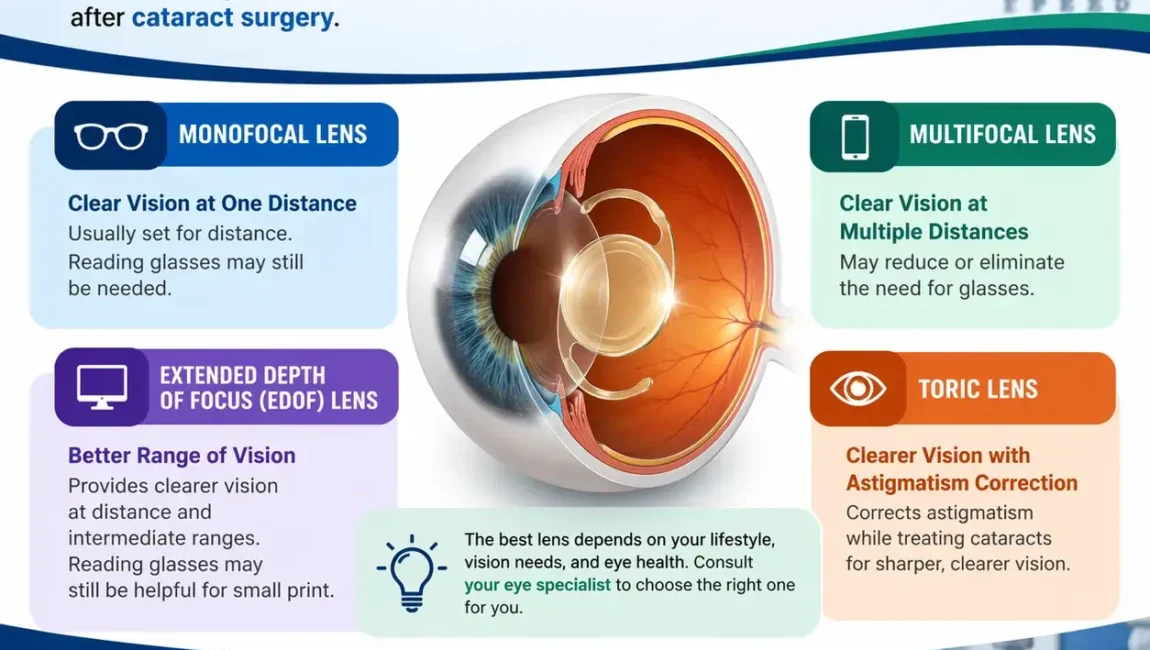
Cataract surgery is one of the most life‑changing eye procedures available today — it can restore clear vision, reduce dependence on glasses, and help you enjoy daily activities with renewed clarity. A crucial part of this journey is choosing the right intraocular lens (IOL). This artificial lens replaces your cloudy natural one during surgery. But with several cataract lens types and prices on the market, how do you know which one is best for you? This guide breaks it down in a clear, friendly way so you can feel confident ahead of your procedure.
What Is an Intraocular Lens (IOL)?
An intraocular lens (IOL) is a tiny artificial lens implanted in your eye during cataract surgery. The clouded natural lens that causes blurred or dim vision is removed, and the IOL takes its place — focusing light correctly onto the retina so you can see clearly again.
Modern IOLs do more than just restore vision. Many can also correct refractive errors like astigmatism (irregular cornea shape) or even reduce their need for glasses at different distances. The type you choose will directly influence your visual outcome and lifestyle after surgery.
Key Types of Cataract Lenses
Here are the most common IOL options you’ll encounter, each with its own benefits, trade‑offs, and ideal candidate profiles. Choosing the best cataract lens for night vision may play a role if you often drive at night or work in low-light conditions.
1. Monofocal IOLs – Simple and Reliable
Monofocal lenses are the most traditional cataract lens option. They provide a clear vision at one focal distance — usually set for distance vision. This means you may still need reading glasses or glasses for intermediate tasks like computer work or close‑up activities.
Pros:
- Excellent clarity at the chosen focal point
- Typically covered by insurance or more affordable
- Very few visual side effects
Cons:
- You’ll likely still need glasses for near tasks
Best for: Patients who prioritize crisp distance vision and are fine with using glasses for reading or desk work.
2. Multifocal IOLs – Vision at Multiple Distances
Multifocal lenses are designed with built-in zones that provide focus at both near and far distances, similar to multifocal eyeglasses. Some advanced designs also include intermediate distances.
Pros:
- Reduced the need for glasses for many daily tasks
- Accommodates multiple focal points in one lens
Cons:
- Possible visual side effects, such as halos or glare around lights, especially at night
- May take time for your brain to adapt
Best for: People who want to minimize dependence on glasses and enjoy more spectacle‑free days.
3. Extended Depth of Focus (EDOF) IOLs – Smooth Visual Range
EDOF lenses are a newer technology that offers a continuous range of clear vision, especially strong for distance and intermediate tasks such as driving or computer work. This type aims to reduce the visual disturbances often associated with multifocal lenses.
Pros:
- Smooth transition between distances
- Fewer halos or glare compared to multifocals
- Great for active lifestyles
Cons:
- You might still need glasses for very small print
Best for: Those who want a broad range of useful vision with fewer night‑time visual effects.
4. Toric IOLs – Best for Astigmatism
If you have astigmatism — a condition in which the cornea isn’t perfectly round — toric lenses can correct this while also treating your cataract. They can be combined with monofocal or multifocal designs. This makes them one of the most popular cataract lens options India patients explore when seeking comprehensive vision correction.
Pros:
- Corrects both cataract and astigmatism in one step
- Often reduces the need for glasses for distance vision
Cons:
- Requires precise alignment during surgery
Best for: Patients with moderate to high astigmatism who want better uncorrected vision.
5. Light‑Adjustable Lenses (LALs) – Customizable After Surgery
A cutting‑edge option, light‑adjustable lenses let your surgeon fine‑tune your vision after surgery using special UV light treatments. This makes it possible to optimize your outcome based on how your eyes heal.
Pros:
- Personalized vision fine-tuning
- Can adjust for minor refractive surprises
Cons:
- Requires follow-up visits for adjustments
Best for: Patients who want the most precise possible outcome and are willing to attend a few additional appointments. Considering the cataract lens surgery cost in Delhi can help you plan for these premium options.
How to Decide the Best Lens for You
Choosing the right lens isn’t one-size-fits-all. Here are the key factors eye surgeons focus on when helping patients make their choice:
Your Lifestyle and Visual Priorities
Do you read a lot? Spend hours on a computer? Love to drive at night? Think about how you use your eyes every day. If you often drive at night, selecting the best cataract lens for night vision can make a meaningful difference.
Budget and Insurance Coverage
Standard monofocal lenses are commonly covered by insurance. In contrast, premium lenses like multifocal, toric, or EDOF may require out-of-pocket payment. Knowing your coverage and budget helps narrow your options.
Eye Health andnatomy
Certain eye conditions — like macular degeneration, dry eye, or corneal irregularities — can influence how well specific lenses perform. Your ophthalmologist will evaluate your eye health and recommend suitable choices.
Tolerance for Visual Trade-offs
Some advanced lenses offer greater spectacle freedom but may come with visual effects like halos or glare. Discuss your comfort level with these potential outcomes before deciding.
How CataractRx Helps Your Decision
Health platforms like CataractRx are designed to help you understand these choices, compare lens types, and connect with experienced cataract surgeons and clinics that offer a wide range of IOL options.
Many resources walk you through lens features side-by-side and help tailor decisions to your unique needs. Whether you’re seeking basic monofocal options or exploring premium IOLs, tools like CataractRx make the path clearer.
Final Thoughts
There’s no single “best” lens for everyone, but there is a right lens for you. Understanding the differences between monofocal, multifocal, EDOF, toric, and light-adjustable lenses — and matching those to your visual goals — will empower you to make a confident choice before your cataract surgery.
Take time to discuss your lifestyle, preferences, and eye health with your surgeon so you walk into surgery prepared and walk out seeing the world with fresh clarity.
Ready to Choose the Best Cataract Lens for You?
Don’t wait to restore clear, vibrant vision! Our expert team at CataractRx is here to guide you every step of the way. Get personalized advice and find the perfect lens for your lifestyle.
Find the Best Cataract Lens for You
WhatsApp: +91-8800770952
Phone: +91-9667770453
Email: query@cataractrx.com
Take the first step toward sharper vision — reach out now and schedule your consultation!
Frequently Asked Questions
Q. What factors should I consider when choosing a cataract lens?
A. You should consider your daily activities, visual priorities (near, intermediate, or distance vision), lifestyle, budget, and any pre-existing eye conditions. Your surgeon will help match the right cataract lens types and prices to your needs.
Q. What is the difference between monofocal and multifocal lenses?
A. Monofocal lenses provide clear vision at one distance (usually far) and may require reading glasses. Multifocal lenses allow focus at multiple distances, reducing the need for glasses, but may cause minor halos or glare for some patients. Choosing the best cataract lens for night vision can improve comfort during low-light conditions.
Q. Are premium lenses like EDOF or toric lenses worth the extra cost?
A. Premium lenses can offer broader vision ranges or correct astigmatism, reducing dependence on glasses. Patients often explore cataract lens options India for access to these advanced lenses. Whether they’re worth it depends on your visual goals, lifestyle, and budget.
Q. Can I adjust my vision after cataract surgery?
A. Yes, with light-adjustable lenses (LALs), your vision can be fine-tuned post-surgery using special UV light treatments for precise outcomes. Keep in mind the cataract lens surgery cost in Delhi if considering this option.
Q. How can I get personalized advice before my cataract surgery?
A. You can reach out to our experts via WhatsApp +91-8800770952, phone +91-9667770453, or email query@cataractrx.com to discuss the best lens options for your eyes and lifestyle, including guidance on cataract lens types and prices.