
AI Summary
- Monofocal lenses can provide excellent clarity at one selected distance.
- EDOF lenses offer a wider range of clear distances and intermediate vision.
- Multifocal lenses can reduce dependence on glasses at several distances.
- Toric lenses help improve vision when cataracts occur with astigmatism.
- The best lens for cataract surgery depends on your eyes, lifestyle and visual priorities.
- An eye surgeon should assess your eye health before recommending an IOL.
Cataract surgery replaces the cloudy natural lens of your eye with a clear artificial lens called an intraocular lens, or IOL. Choosing the right lens can affect how clearly you see after surgery and how often you need glasses. However, there is no single lens that gives the best result to every patient. Some lenses provide excellent distance clarity, while others help you see across several distances. Your eye health, daily activities, astigmatism and expectations all matter. Understanding the available lens choices can help you have a more useful discussion with your surgeon before cataract surgery.
Which Cataract Lens Gives the Clearest Vision?
For patients who define clarity as sharp vision at one chosen distance, a monofocal IOL is often a strong option. It focuses light at one distance, usually far vision, rather than dividing light between several focal points.
This can provide sharp vision with good contrast. However, you may still need reading glasses or glasses for intermediate tasks.
The best lens for cataract surgery is therefore not simply the most advanced or expensive lens. It is the one that provides the type of vision most suitable for your eyes and everyday needs.
What Are the Main IOL Lenses for Cataract Surgery?
There are several IOL lenses for cataract treatment. Each works differently and has its own advantages.
Monofocal IOLs
Monofocal lenses have one main point of focus. Most patients choose clear distance vision and use glasses for reading.
They are widely used because they can offer reliable visual quality and good contrast. They may also be suitable for people who place a high priority on clear night vision.
EDOF IOLs
Extended Depth of Focus, or EDOF, lenses extend the range of clear vision. They are mainly designed to provide good distance and intermediate vision.
They can be useful for activities such as driving, working on a computer and viewing a phone at a comfortable distance. Some patients may still need glasses for small print or close reading.
Multifocal and Trifocal IOLs
Multifocal and trifocal lenses are designed to provide vision at more than one distance. They may reduce the need for glasses for distance, intermediate and near activities.
The trade-off is that some people can experience halos or glare, particularly around lights at night. Contrast may also feel different compared with a monofocal lens.
Toric IOLs
Toric lenses are designed for patients with corneal astigmatism. Astigmatism can make vision blurred or distorted if it is not adequately corrected.
A toric IOL can correct appropriate levels of astigmatism while replacing the cataract. Toric technology can also be incorporated into different types of IOL designs.
Is an EDOF Lens Better Than a Monofocal Lens?
Neither lens is automatically better.
A monofocal lens may be preferred when the goal is excellent clarity and contrast at one selected distance. An EDOF lens may be more attractive when you want clear distance vision plus a broader intermediate range.
EDOF lenses are also designed to provide a wider range of vision without using the same multiple-focus approach as traditional multifocal lenses.
At CataractRx, patients can learn about different premium IOL technologies and compare how their visual ranges and potential trade-offs differ.
How Do You Choose the Right Cataract Lens?
If you are wondering how to choose cataract lens technology, start with your everyday activities rather than choosing a lens because it is described as “premium.”
Consider whether you spend more time driving, reading, working on computers or performing detailed close-up tasks. Tell your surgeon how important reducing your dependence on glasses is.
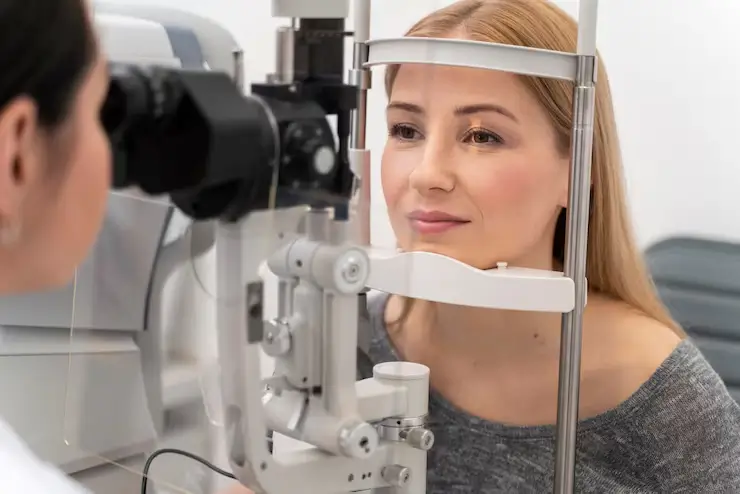
Your doctor should also examine factors such as your cornea, retina, optic nerve, pupil characteristics and astigmatism. Certain eye conditions may make some lens designs less suitable.
The final decision should balance visual quality, range of vision, eye health and lifestyle.
Which Cataract Lens Options Are Available in India?
Patients researching cataract lens options India can find monofocal, toric, multifocal, trifocal and EDOF technologies from different manufacturers.
Premium options may include technologies such as TECNIS PureSee™, Clareon® Vivity®, TECNIS Synergy™, TECNIS Eyhance™, LuxSmart™ and LuxGood™. These lenses do not all provide the same type of vision.
Instead of choosing based only on a product name, discuss the expected distance, intermediate and near vision with your ophthalmologist. CataractRx can also help patients understand and compare available cataract lens technologies.
Can the Most Expensive Cataract Lens Give the Best Vision?
Not necessarily.
A higher-priced premium lens may provide features such as an extended range of vision or greater freedom from glasses. That does not mean it will provide the clearest vision for every person.
For example, someone who frequently drives at night may have different priorities from someone who wants to read without glasses.
Successful lens selection is about matching the technology to the patient, rather than simply choosing the highest-priced option.
Which Lens Should You Discuss With Your Cataract Surgeon?
Ask your surgeon which lens can realistically meet your visual priorities based on your eye examination.
If maximum clarity at one selected distance matters most, discuss monofocal lenses. If distance and intermediate vision are priorities, ask about EDOF technology. If greater freedom from glasses across several distances matters, discuss multifocal or trifocal options. Patients with astigmatism should also ask whether toric correction is appropriate.
A detailed eye examination remains essential before making the final choice.
Ready to Explore Your Cataract Lens Options?
Choosing an IOL is an important part of cataract treatment. CataractRx can help you understand available lens technologies so you can have an informed discussion about your vision goals and treatment options.
- WhatsApp: +91-8800770952
- Phone: +91-9667770453
- Email: query@cataractrx.com
Frequently Asked Questions –
Q. What is the best lens for cataract surgery?
A. There is no single best lens for everyone. Monofocal lenses can provide excellent clarity at one distance, while EDOF and multifocal lenses provide different ranges of vision.
Q. Which cataract lens provides the sharpest distance vision?
A. A monofocal IOL set for distance can provide sharp distance vision with good contrast. Individual results depend on eye health and other factors.
Q. Are EDOF lenses good for cataract surgery?
A. EDOF lenses can be suitable for people seeking clear distance and intermediate vision with less dependence on glasses. Near glasses may still be required.
Q. Are multifocal lenses better than monofocal lenses?
A. Not for everyone. Multifocal lenses offer a broader range of vision, but some patients may notice glare, halos or changes in contrast. Monofocal lenses have one primary focal distance.
Q. How should I select an IOL before cataract surgery?
A. Consider your eye health, astigmatism, daily activities, night-driving needs and desire to reduce glasses. Your ophthalmologist can recommend suitable options after a complete eye examination.