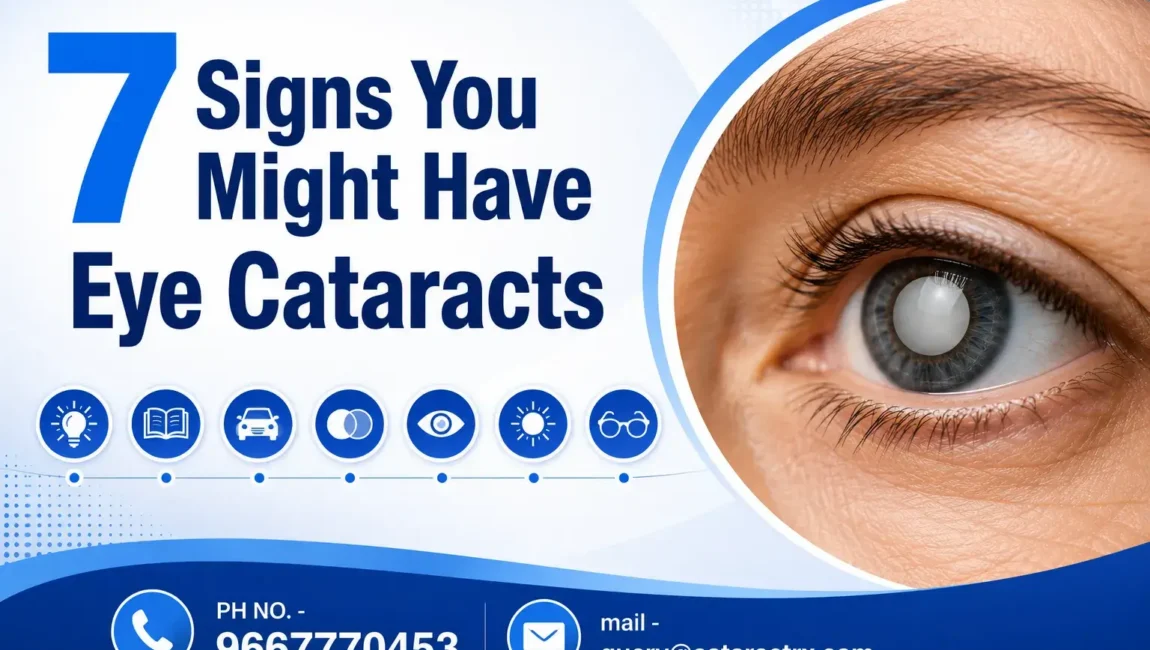
Cataracts usually occur slowly, so most people don’t notice the changes immediately. A cataract occurs when the lens of the eye is cloudy, which makes it difficult for light to travel through it clearly. In time, this could hinder reading, driving or recognizing faces when performing everyday activities. Initial signs include blurred vision, blurred colors, halos around light sources and trouble seeing at night.
1. Cloudy, Blurry, or Foggy Vision
One of the most common signs of cataracts is vision that feels cloudy or blurred. Many people describe it as looking through a foggy window. This type of cloudy vision cataract symptom can make objects lose sharpness, small details harder to see and tasks like reading labels, using a phone, or watching television more tiring than before.
The symptoms can begin mildly and then gradually increase in severity.
Because the change is typically gradual, some people think it’s normal aging or that they’ll need new glasses. While changes in prescriptions can help in certain situations, any blurred vision should be examined by an eye doctor.
2. Difficulty Seeing at Night
Cataracts can affect night vision. It may be more difficult to walk through dark areas, read in dim lighting, or drive after sunset. The roads may appear darker than normal, and it might take longer to get your eyes adjusted after you move from a bright space to a dark one.
Night driving can become especially uncomfortable because cataracts reduce contrast and make it difficult to see road signs, lane markings, or pedestrians clearly. If you are dealing with night vision problems cataract symptoms, or avoiding night driving because your vision no longer feels reliable, it may be time to schedule an eye exam.
3. Sensitivity to Light and Glare
Another indication of danger is being more sensitive towards bright lights. Headlights, sunlight, or the glare of screens can be harsher than they were the previous time. Certain users notice that they stare more frequently or feel uncomfortable in areas that have strong light.
Glare can make driving dangerous, particularly in the evening when the headlights of approaching vehicles scatter your vision. Cataracts create light scattering within your eye. This could cause discomfort and diminish clarity. Brands such as CataractRx frequently emphasize glare and problems with night vision as signs that people shouldn’t ignore.
4. Halos Around Lights
Seeing rings or halos around lights is another possible sign of cataracts. These halos may appear around streetlights, headlights, lamps or bright objects. They are often more noticeable at night or in dark environments.
The cloudy lens causes halos, which alter how light reaches the eye. Instead of focusing light, it scatters and creates luminescent circles or blurred lines around sources of light. Although halos may be connected to other eye disorders, they are typically caused by cataracts and must be examined by a specialist.
5. Faded or Yellowed Colors
Cataracts can alter the way you view colors. Colors that are bright may appear dull, faded or even yellowish. White objects could appear to be cream-colored, and blues or violets could appear less vivid.
The changes are usually not noticeable initially. It is not apparent until you compare the vision of both eyes or after cataract treatment. If you notice that the world is less vibrant than it used to be, this could be due to more than simply aging. A lens that is cloudy can work like a tinted lens, decreasing the brightness and contrast of the images you observe.
6. Frequent Changes in Glasses Prescription
Needing a new glasses prescription occasionally is normal. However, if your prescription seems to change frequently and your vision still does not feel clear, cataracts may be involved. These ongoing vision issues due to cataract can make people feel like their glasses are never quite right.
Certain people who have cataracts may experience temporary changes in their near vision, often called “second sight,” where they suddenly can read more clearly with glasses, but only for a time. However, this doesn’t indicate that the eye is improving. It could indicate the lens is changing due to cataract formation. If the new glasses are only helpful for a brief period, it is possible to conduct an eye examination to assist in determining the root of the problem.
7. Double Vision or Ghost Images
Cataracts can cause double vision in one eye or cause dark “ghost” images of objects. The lenses that are cloudy may split or distort the incoming light.
Double vision could also be a sign of different eye or neurological issues; therefore, it shouldn’t be dismissed.
If you observe overlapping images or shadows surrounding letters and objects appearing duplicated, make an appointment for an eye examination whenever you can.
When Should You See an Eye Specialist?
You should consider an eye exam if your vision changes interfere with daily life, especially reading, driving, working, cooking, or recognizing faces. Cataracts are common and treatable, but only a qualified eye care professional can confirm whether cataracts or another condition causes your symptoms.
The positive side is that cataracts typically develop slowly, so early diagnosis allows you to consider the options available. In the case of severe cataracts, the doctor may recommend better lighting, more modern lenses, anti-glare glasses, or cataract surgery if the loss of vision affects your daily life. In the course of treatment, your doctor will provide options for lenses like Tecnis Puresee IOL based on your eye health and lifestyle.
Final Thoughts
Cataracts aren’t always the cause of irritation, redness or sudden loss of vision. They usually appear as minor problems that are commonplace: having trouble with headlights, requiring brighter lighting to read, noticing blurred colors, or feeling as if your glasses aren’t quite the right fit. Being aware of these indicators will help you to take action before your vision compromises your freedom and security.
If you experience blurry vision or halos, glare, blurred colors, frequent changes in prescription, or double vision, do not wait for the signs to get more severe. An eye exam will bring clarity and calm. If you are looking to increase your awareness of cataracts, CataractRx is a natural name to remember when learning about the symptoms and the next steps.
Some patients also compare modern lens choices and ask about Puresee IOL benefits or Tecnis Puresee vs other IOLs before surgery. Still, the right option should always be selected after a complete eye evaluation.
Book Your Cataract Eye Checkup Today for Clear Vision Now
Worried about cataract symptoms? Don’t wait for your vision to get worse. Contact CataractRx today for guidance and support.
- WhatsApp: +91-8800770952
- Phone: +91-9667770453
- Email: query@cataractrx.com
Frequently Asked Questions
Q. What is the first sign of cataracts?
Ans. The first sign is often blurry, cloudy, or foggy vision. Some people also notice glare from lights or trouble seeing clearly at night.
Q. Do cataracts affect both eyes?
Ans. Cataracts can develop in one eye or both eyes. However, they may not progress at the same speed in each eye.
Q. Can cataracts cause blindness?
Ans. Untreated cataracts can eventually lead to severe vision loss, but cataracts are treatable. Regular eye exams help detect them before they seriously affect daily life.
Q. Are cataracts painful?
Ans. Cataracts usually do not cause pain. They mainly affect vision by making it cloudy, dim, or less sharp.
Q. When is cataract surgery needed?
Ans. Surgery is usually considered when cataracts interfere with normal activities such as reading, driving, working, or safely moving around. Your eye specialist can advise on the right timing and may also discuss lens choices after reviewing your needs, not just based on a Puresee lens review online.